Turning Instagram Comments Into Booked Sales Calls

A comment is not engagement, it is often a buyer raising their hand in public. "How much is this" and "does this work for beginners" sit under posts every day, and most accounts still treat them as vanity metrics rather than the start of a sales conversation. Converting Instagram comments into booked calls is not about replying faster to everything, it is about noticing which comments are actually buying signals and moving those, specifically, into a DM conversation before the moment passes.
It is easy to underestimate how much genuine pipeline sits in a comments section, because comments are visually indistinguishable from each other until you actually read them. A post with two hundred comments might contain only three or four with real buying intent, buried among emoji reactions and generic praise, and those three or four are worth more than the other one hundred and ninety-six combined. The whole discipline here is finding them reliably, every time, without reading every comment by hand.
Why comments convert differently to DMs
A comment happens in public, in front of the poster's followers, which changes what people are willing to type. Someone rarely writes their budget or their timeline in a comment, but they will happily type a single word, a question mark, or "interested" if it is easy and low-risk to do. The job is recognising that low-effort public signal and turning it into a private conversation where the real qualifying questions can actually be asked.
There is also a social dimension worth understanding: a comment is partly performed for an audience, while a DM is not. Someone might comment "amazing" to signal support publicly, then privately message asking about price a moment later, because the DM is where they feel safe being genuinely direct. Reading only the public comment and missing the private follow-up, or never prompting one, is one of the most common ways buying intent slips through unnoticed.
Building a comment-to-DM process
1. Decide your buying-intent keywords in advance
Rather than reading every comment manually, define the words and phrases that reliably signal interest for your offer: price questions, "link please", a specific product or programme name, or a single keyword you have told your audience to comment for access to something. This turns comment monitoring from a guessing game into a defined trigger list.
2. Reply publicly, then move privately
A short public reply keeps the thread active for other readers, but the real qualifying conversation should move to DM immediately, where you can ask about budget, timeline and fit without an audience watching. The public comment is the hook; the DM is where the sale actually happens.
3. Treat the DM like any other lead, not a special case
Once the conversation moves to DM, it should enter the same scoring and follow-up process as a lead who messaged you directly, not a separate, forgotten thread. This is the step most accounts skip, and it is where comment-sourced leads quietly go cold.
Common mistakes that lose comment-sourced leads
- Replying to the comment but never following up in DM once the person does not reply first.
- Treating every comment the same, so genuine buying-intent comments are buried among "nice post" replies.
- Losing track of which post or campaign generated a lead, so you cannot tell which content is actually working.
- Sending the DM but never scoring or prioritising it, so it competes for attention with a general enquiry that arrived first.
- Waiting until the end of the day to review comments, by which point the person who commented has moved on and the moment has passed.
What to say in the opening DM
The opening message matters more than most accounts give it credit for, because it is the first genuinely private thing the prospect receives from you. A generic "thanks for your comment, how can I help" wastes the specificity of what they actually asked. Reference the exact thing they commented about, whether that was a price question, a feature, or a specific outcome mentioned in the post, so the DM reads as a continuation of what they said, not a template fired at everyone who commented that day.
A short, direct question at the end of the opening message tends to outperform an open "let me know if you have any questions", because it gives the prospect something concrete and easy to answer. Something closer to "are you looking to get started in the next few weeks, or just exploring for now" moves the conversation forward immediately, rather than leaving the next move entirely up to them.
Automating the trigger without losing the personal touch
Keyword-triggered DM automation, of the kind covered in how to capture leads from Instagram DMs effectively, does the first pass for you: it watches comments for your defined keywords, sends a genuine opening DM, and hands the conversation to a human once it is real. That is the difference between a bot that annoys people and a system that simply makes sure nobody's raised hand goes unanswered.
Measuring whether it is actually working
The metric that matters is not comment volume, it is the percentage of buying-intent comments that reach a booked call. Track that specifically, separate from general engagement, and you will quickly see which posts and which keywords are producing real pipeline rather than just likes.
It is also worth tracking how long it takes a buying-intent comment to receive its first DM reply, since this behaves the same way response speed does everywhere else in a DM pipeline: the faster the follow-up, the more likely the person is still in the mindset they were in when they commented. A comment answered within minutes converts at a meaningfully different rate to the same comment answered the next day, even though the words in the reply might be identical.
What this looks like across different types of content
Not every post generates the same kind of comment. A results-focused post, a client win or a before-and-after, tends to generate emotional, general praise with occasional specific questions buried inside it. A direct offer post, or content that explicitly invites a question, tends to generate a higher proportion of genuine buying-intent comments, simply because it has told the audience what to ask about. If comment-to-call conversion feels low, it is worth checking whether the underlying content is actually inviting the kind of comment worth converting, before assuming the follow-up process is the problem.
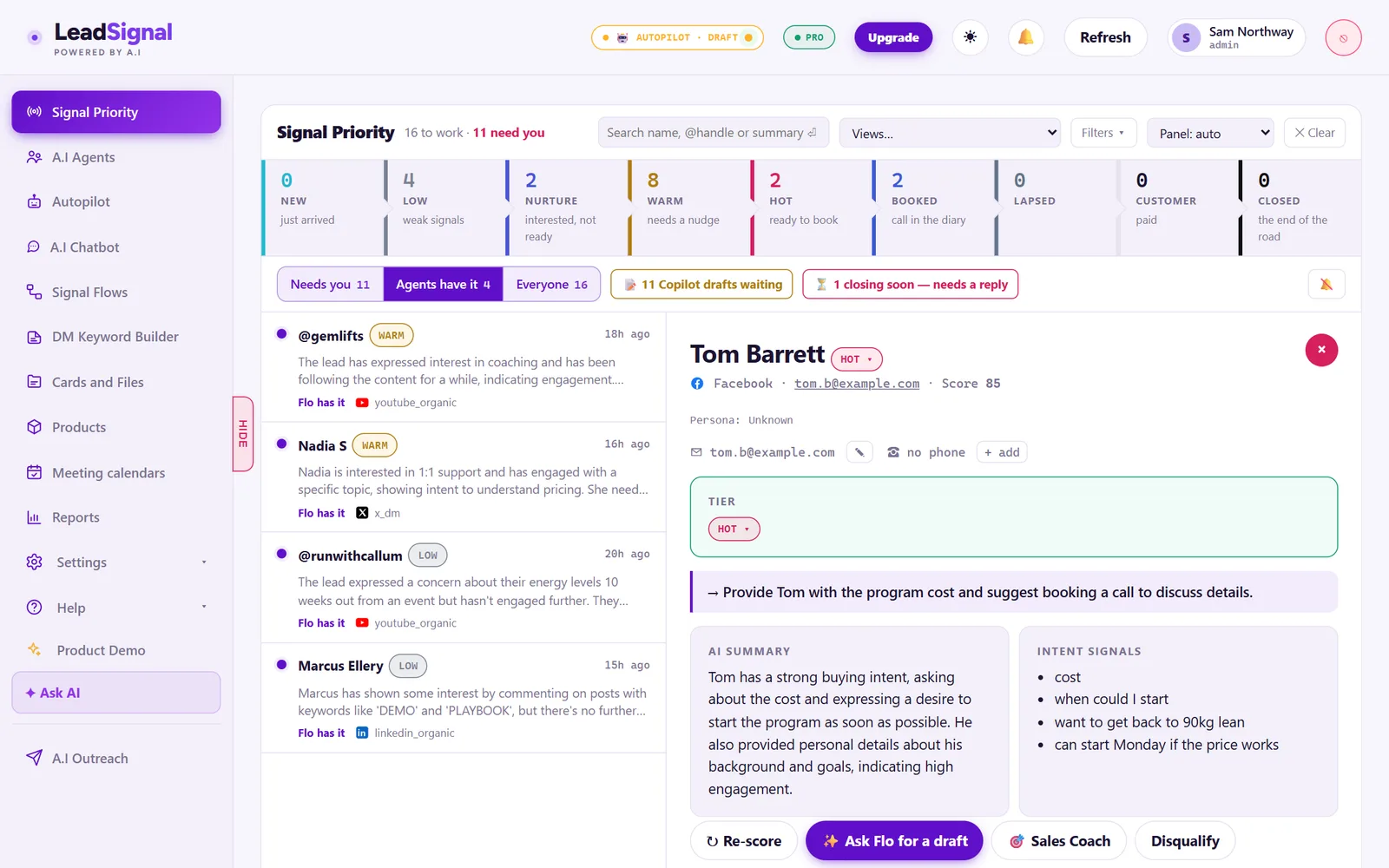
This is exactly the kind of workflow LeadSignal automates end to end, from comment detection through to a scored, prioritised DM conversation. See the full strategy in maximise your social media lead generation strategy.
Getting the whole team aligned on the process
If more than one person replies to comments, whether that is you and a virtual assistant, or a small setter team, the process above only works if everyone follows it the same way. A single person forgetting to move a buying-intent comment into DM, or replying with a generic line instead of a specific one, quietly undoes the consistency the rest of the system relies on. Write the trigger keywords, the opening DM approach and the handover point down explicitly, rather than assuming everyone already agrees on what counts as a "real" comment worth acting on. A short written checklist, reviewed after any post that generates unusually high comment volume, is usually enough to keep everyone working the same way without turning this into a heavy process document nobody actually follows. It is worth revisiting after any post that performs unusually well too, since a viral post can generate a week's worth of comments in a single day and expose gaps in the process nobody had noticed at normal volume.
FAQ
How do I know which comments actually signal buying intent?
Look for specific questions about price, availability or fit, rather than general positive comments. Defining a short list of trigger keywords in advance makes this consistent rather than reliant on someone spotting it manually, and reviewing that list every few months as your content and audience evolve keeps it accurate.
Should I reply to buying-intent comments in public or move to DM straight away?
A brief public reply keeps the thread visible, but the qualifying conversation, where you ask about budget and timeline, should move to DM immediately so the prospect can answer honestly without an audience. Waiting too long to invite the DM risks the prospect losing momentum or asking their question to someone else instead.
Does comment automation feel robotic to the person commenting?
It should not, if the opening message is written in your voice and the conversation hands to a human as soon as it becomes a real qualifying discussion. The automation's job is speed and consistency, not replacing the actual conversation, and getting that balance right is what separates a system people trust from one that feels like being fobbed off to a bot. Reviewing a sample of automated openers every so often, and adjusting the wording if it starts to feel stale, keeps the channel feeling personal even as volume grows.
The self-serve demo builds a workspace from your real setup — no card, no call.