A Lead-Capture Checklist for Social Teams Who Keep Missing DMs

Managing DMs for one account is a task. Managing DMs for eight client accounts, across Instagram, Facebook, web chat and whatever channel this month's biggest client insists on, is a structural problem that no amount of individual diligence solves. Agencies lose leads not because staff are careless, but because the system relies on someone remembering to check the right inbox at the right time, across every account, every day. This checklist is for closing the gaps that structure, not effort, is responsible for.
What makes this genuinely difficult is that missed DMs are almost invisible until a client asks about them. A client rarely finds out their business missed a lead unless the prospect complains publicly or mentions it elsewhere, which means an agency can be quietly losing leads for months without a single internal signal that anything is wrong. The checklist below is designed to surface those gaps before a client does.
Why agencies miss more DMs than single-brand accounts
A single business owner checking their own DMs has one inbox and a strong personal incentive to answer it. An agency managing several client accounts has multiple inboxes, shift changes, staff turnover, and clients who each expect a different standard of response time, with none of the natural urgency of it being your own money on the line. Missed leads in an agency setting are usually a coverage gap, not a motivation gap.
Staff turnover deserves particular attention here, because it is one of the most common, least discussed causes of missed DMs. A staff member who understood a client's account, its tone, its usual questions, its keyword triggers, leaves, and the handover to whoever takes over is often incomplete. The account does not stop receiving messages during that transition; it just stops having someone who fully understands how to answer them well.
The checklist
1. Every account has a named owner, and a named backup
If a DM going unanswered depends on one specific person being online, it will eventually go unanswered. Every client account needs a primary owner and a defined backup who is notified, not just theoretically available, when coverage is needed.
2. Response-time targets exist per account, in writing
"We try to reply quickly" is not a target, it is a hope. Agree an explicit response-time target with each client and measure it, so a slow account is visible before the client notices it themselves. A written target also protects the agency: it turns a vague expectation into something both sides agreed to, which matters when a client's assumption of what "fast" means is unrealistic given the actual volume being handled.
3. Every channel a client runs is actually being watched
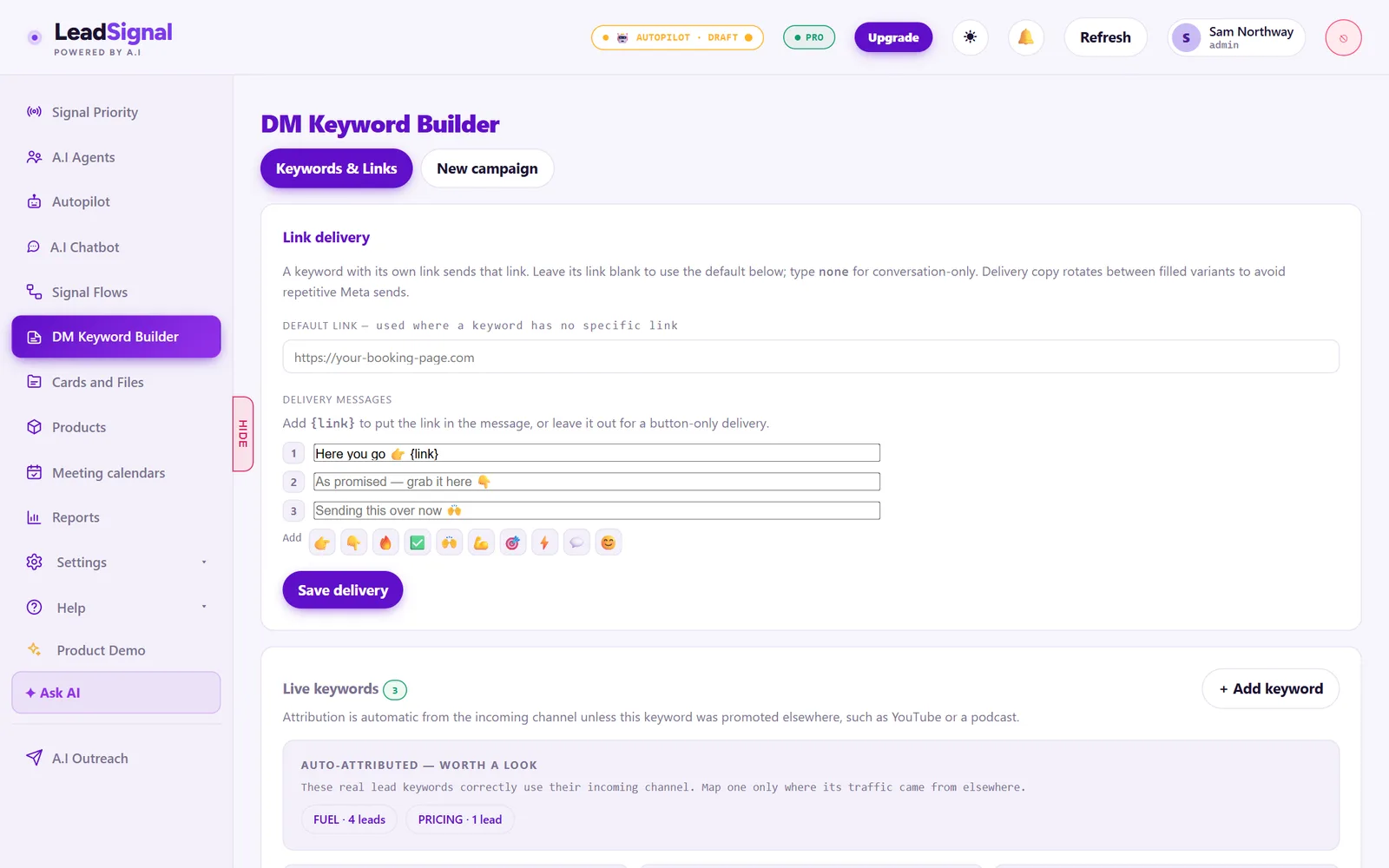
Audit each account against every channel it is live on: Instagram DMs, Facebook DMs, web chat, and any newer channel like YouTube comments or WhatsApp that was added after the original onboarding. It is common for a channel added later to quietly have no owner at all, particularly when it was added for a specific short-term campaign and simply never formally decommissioned or assigned once the campaign ended.
This is worth checking specifically rather than assuming, because the person who set up a new channel and the person currently responsible for day-to-day DM coverage are often not the same person, weeks or months later. A channel audit should be a standing item, not a one-off exercise done at onboarding and never revisited.
4. Leads are scored, not just answered
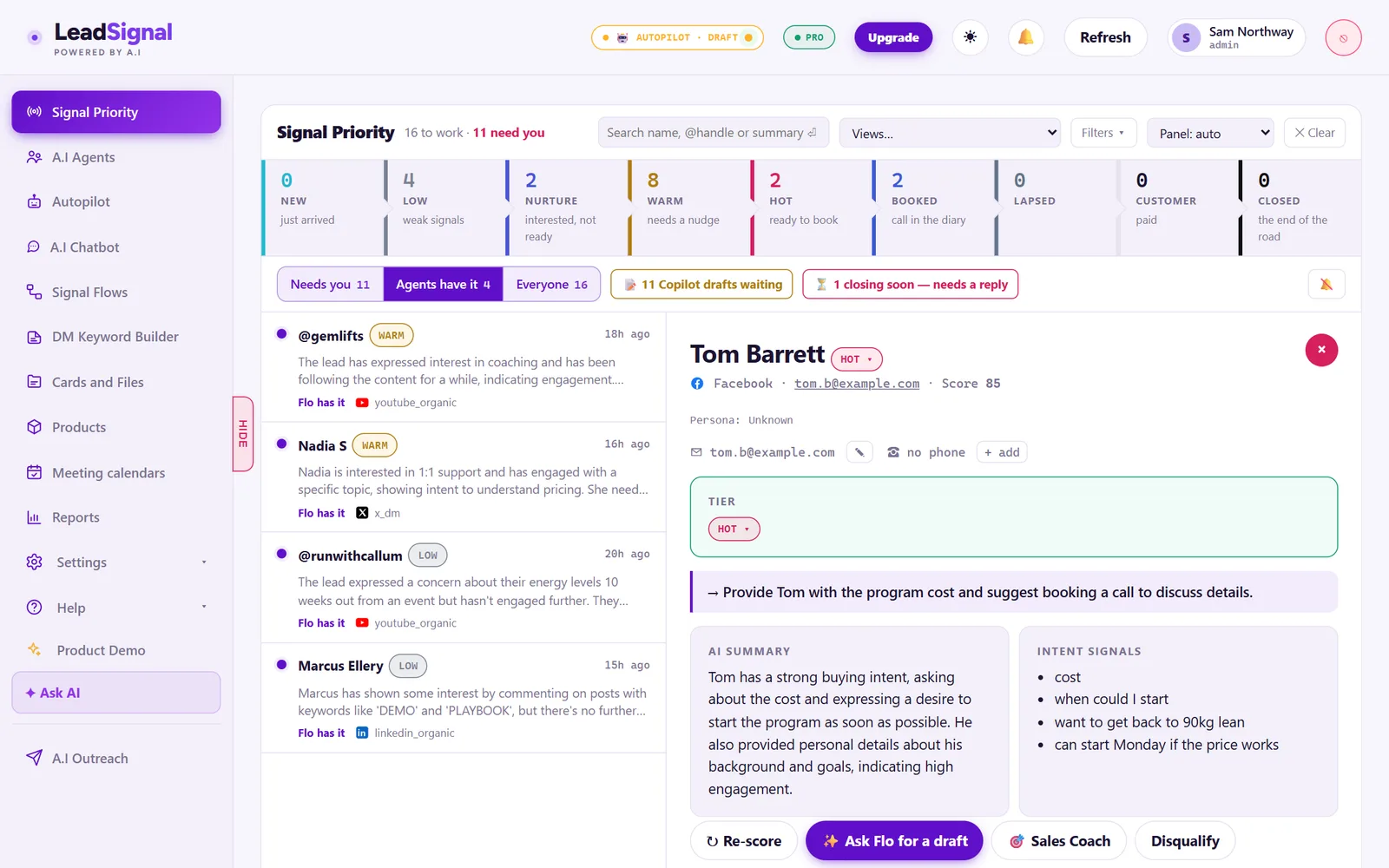
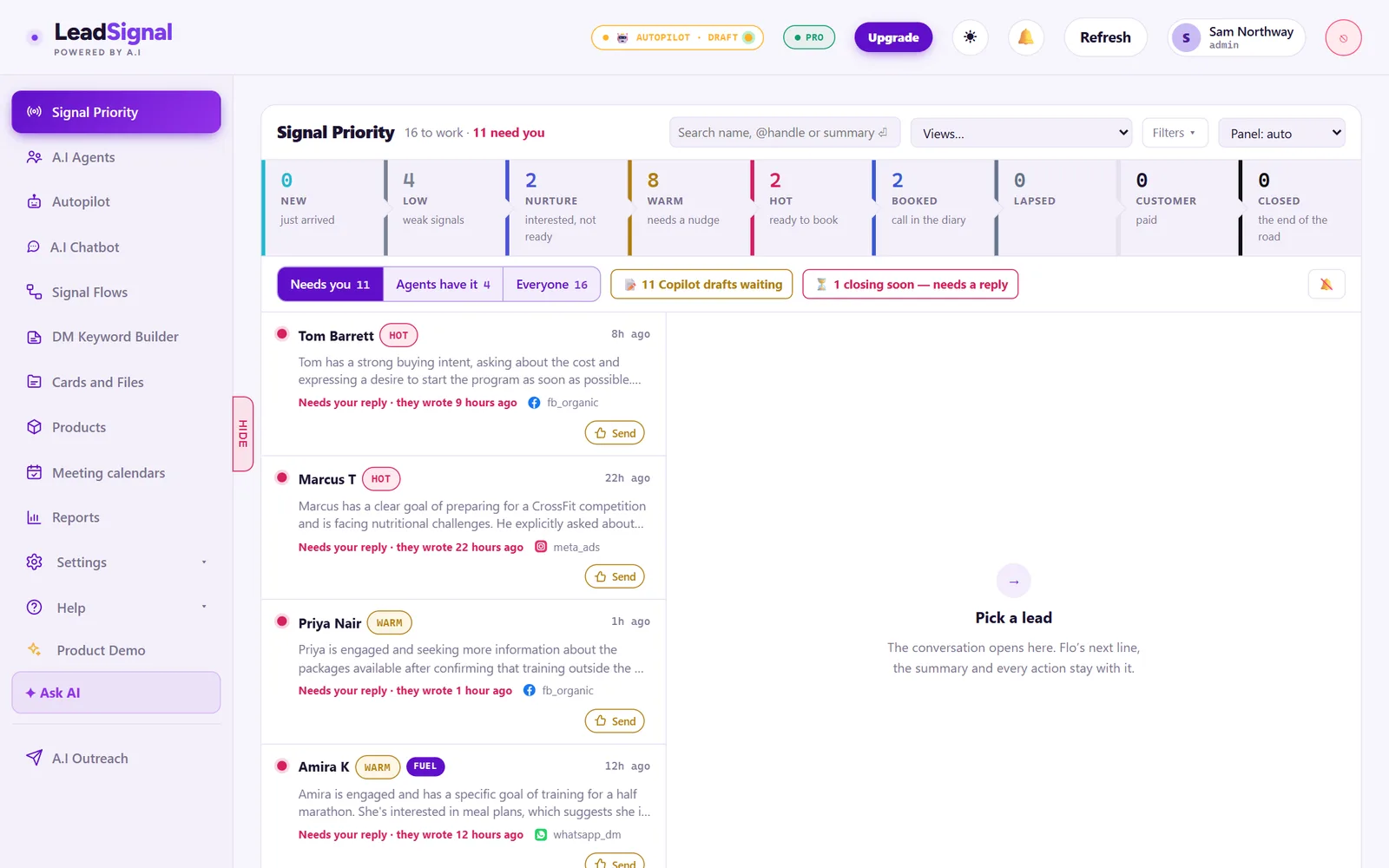
Answering every DM within an hour still loses deals if the hottest lead of the day is answered in the same order as a "nice post" comment. A scoring system that ranks conversations by buying intent, not arrival time, is what actually protects the leads worth protecting. Without this, "we answer everything" quietly becomes "we answer everything in a random order", which produces the same missed opportunities as not answering at all, just spread more thinly.
5. Attribution exists per client, not just per agency
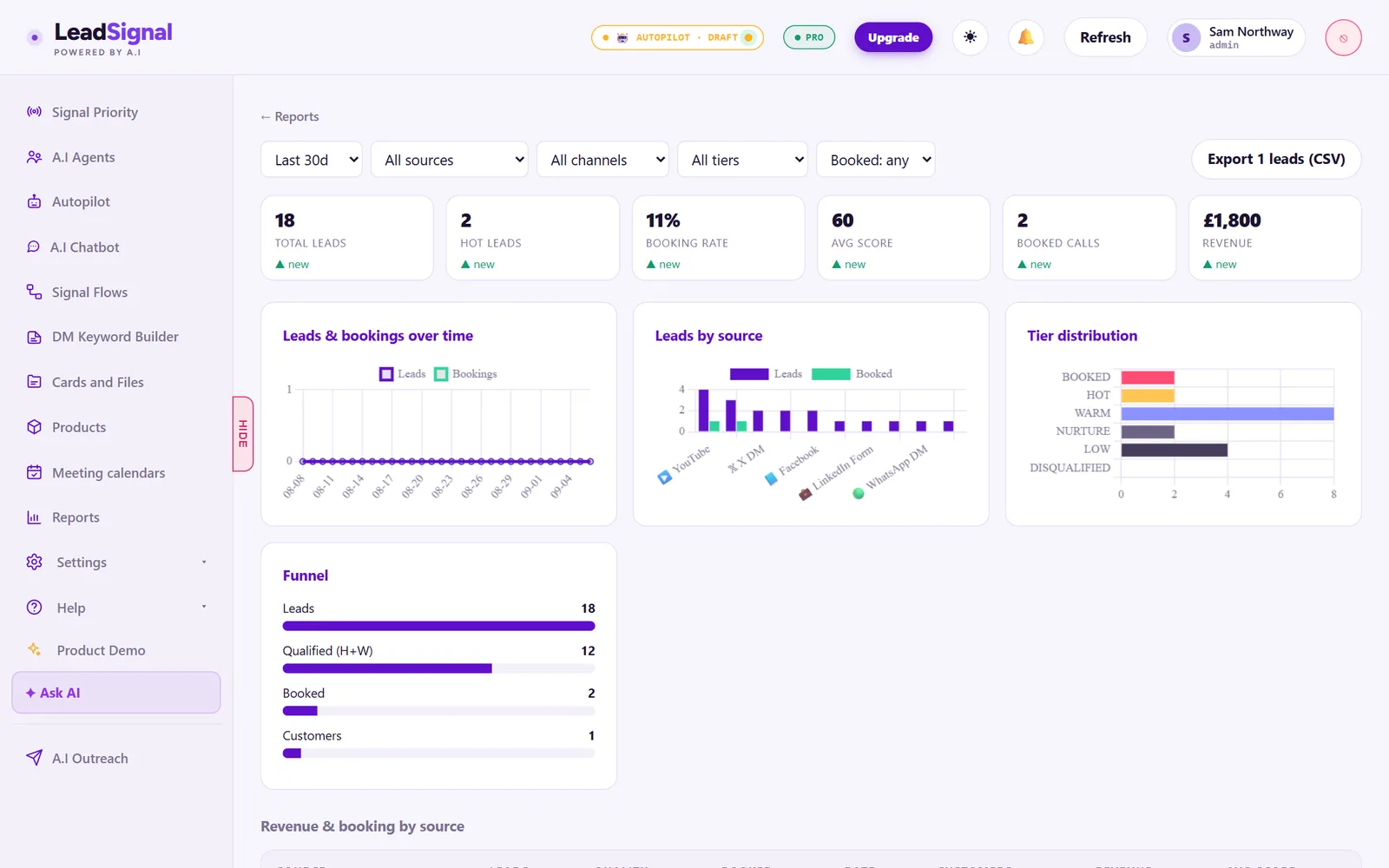
If you cannot show a client which post, campaign or channel actually produced their booked calls, you are reporting activity, not results. This is also where agencies prove their value beyond "we posted content this month", covered in detail in how performance and social lead-generation agencies can prove social media lead attribution. Without this, a strong month and a weak month can look identical in a client report, because neither one shows where the leads actually came from or where they were lost.
6. Handovers do not lose context
When a lead moves between staff, whether a shift change or a handover to a closer, the full conversation history and score should travel with it. Leads regularly go cold at exactly this handover point because the new person has to start the relationship from zero.
Auditing your current coverage honestly
Before implementing new tools or processes, it is worth running an honest audit against the checklist above, account by account, rather than assuming coverage is fine because nobody has complained recently. For each client, ask: who is the named owner right now, today, not six months ago when the account was onboarded? What was the actual response time on the last ten DMs, measured, not estimated? Is every channel that account runs actually being watched, including anything added after the original setup? The answers are frequently less reassuring than the general impression of "we're on top of it."
Making the case to clients for a better system
Clients rarely push back on paying for better DM coverage once the cost of missing leads is made concrete rather than abstract. Framing this as "how many enquiries did we answer within an hour last month, and how many took longer" turns an invisible problem into a number a client can react to, and gives the agency a genuine, measurable improvement to report once the gaps above are closed.
It also reframes the conversation away from a cost the client is being asked to absorb, and towards revenue the client is currently leaving on the table. A specific number, "these four enquiries took over six hours to receive a first reply last month", tends to land more effectively than a general statement about wanting to improve service, because it points at something concrete that changed once fixed.
Rolling this out without disrupting existing accounts
None of the six items above need to be implemented for every client at once. Start with the accounts generating the highest volume of DMs, since that is where coverage gaps cost the most and where the improvement will be most visible fastest. Use the early results, a measurable drop in response time, a clearer attribution report, as the case for rolling the same structure out across the rest of the client base.
It is also worth involving the staff who actually handle these accounts day to day when rolling out changes like these, rather than presenting a finished process from above. The people closest to the inbox usually know exactly where the current gaps are, often better than management does, and their buy-in is what determines whether a new structure actually gets followed once the initial rollout enthusiasm fades.
What this looks like once it is fixed
Instead of relying on staff memory across every client and channel, coverage becomes a system: leads are captured automatically, scored consistently, routed to a named owner, and reported per client with real attribution. This is the structural fix behind the workflows covered in best practices for Facebook lead capture tactics and maximise your social media lead generation strategy, applied across every account rather than one at a time.
FAQ
Why do agencies miss DMs more than individual accounts?
Because coverage depends on multiple people checking multiple inboxes across multiple client accounts, rather than one owner with a direct incentive to answer their own DMs. It is usually a coverage gap in the system, not a lack of effort by staff.
What is the single biggest fix for missed leads across client accounts?
Giving every account and every channel a named owner and backup, and measuring response time explicitly per client, rather than relying on general diligence to cover every inbox. Most of the other fixes on this checklist depend on that one being in place first.
How can an agency prove DMs are actually converting for a client?
By tracking which specific post, campaign or channel produced each booked call, not just reporting total messages answered. Without that attribution, activity and results look the same on a report even when they are not, and the agency has no evidence to point to when a client questions the value of the retainer.
The self-serve demo builds a workspace from your real setup — no card, no call.