Story Reply Automation: Capturing Leads From Instagram Stories

Stories get replies that posts rarely do, because a reply to a Story lands directly in someone's DMs with none of the public visibility a comment has. That privacy is exactly why Stories produce some of the most honest early buying signals available: a person will type a real question or reaction to a Story that they would never leave as a public comment. Most accounts still treat these replies as an afterthought, checked once a day if at all, which quietly wastes one of the highest-intent channels they already have.
Stories also have a shelf life of twenty-four hours, which changes the psychology of replying to one in a way that does not apply to a permanent post. Someone watching a Story is, by definition, paying attention right now, not scrolling back through old content days later. A reply sent in that moment carries a kind of immediacy and honesty that is genuinely harder to get from any other format, and it is exactly the kind of signal a business built around fast, relevant DM follow-up should be built to catch.
Why Story replies behave differently from comments and DMs
A Story reply is reactive rather than deliberate. Someone watching your Stories in real time responds to what they are seeing right now, which means the message often arrives with genuine emotional context attached: excitement about a result you posted, a specific question about the offer you just mentioned, or a reaction to a client win. That immediacy is valuable, but it also means the window to respond well is short before the moment, and the intent, cools.
How Story capture fits alongside comments and DMs
Stories are one of three channels that all produce the same kind of early-stage interest, alongside comments and direct DMs, and they benefit from the same underlying discipline covered in turning Instagram comments into booked sales calls: defined triggers, a fast private follow-up, and a single scored pipeline once the conversation is genuinely qualifying. Treating each channel with a different, inconsistent process is a common reason smaller accounts feel like they are "doing a lot" on social without the pipeline to show for it.
Where Story leads get lost
- They arrive in the same inbox as ordinary DMs and get buried without any way to tell they came from a Story specifically.
- Nobody is watching Stories replies outside normal working hours, so anything that comes in overnight sits unanswered for the highest-intent hours after it arrived.
- There is no record of which Story or which piece of content actually produced the reply, so you cannot tell which content is generating conversations.
- Reactions and genuine replies get lumped together, so a heart-eyes emoji and a real question about pricing look identical in a quick scan of the inbox.
- Because Stories expire, there is a temptation to treat the whole channel as disposable, including the leads it produces.
Reading the difference between a reaction and a reply worth acting on
Not every Story interaction deserves the same response. A single emoji reaction is a low-effort acknowledgement, not a lead. What is worth watching for is a written reply: a specific question, a reaction that references the content directly, or anything that goes beyond a default emoji response. Building this distinction into how Stories are monitored, rather than treating every interaction the same, is what stops the channel from feeling like noise, and it is also what keeps the person watching for replies from experiencing fatigue at having to individually consider hundreds of low-value reactions alongside the small number that genuinely matter.
Building a process for Story replies
1. Treat every Story reply as a lead source, not just a DM
Tag or route Story replies distinctly enough that you can see, later, which piece of content produced them. Without that, you lose the feedback loop that tells you which Stories are actually generating conversations versus which are just views. Over a few weeks this feedback loop starts to reveal patterns: certain topics, formats or even times of day consistently outperform others, and that information is only available if replies are tracked back to their source in the first place.
2. Prompt for replies deliberately
Stories that ask a direct question, "which of these two would you choose", or invite a reaction to a result, consistently produce more replies than passive content. If you want Story replies as a lead channel, design a portion of your Stories specifically to invite one.
It also helps to be explicit occasionally, telling your audience directly that replying to a Story is the fastest way to reach you with a question. Many followers assume a reply goes nowhere or gets lost in a pile of interactions, so a simple reminder that a real person reads and responds to Story replies can meaningfully increase how many genuine ones you get.
3. Respond fast, and qualify in the same conversation
Because the emotional context is fresh, a fast, specific reply converts better than a delayed generic one. Use the reply to ask one qualifying question rather than just acknowledging it, so the conversation moves towards a real outcome instead of ending after a single exchange. Waiting until the next check of the inbox, even a few hours later, is often long enough for that emotional immediacy to have faded, and the reply that would have felt natural in the moment can feel oddly delayed by the time it arrives.
4. Do not let the reply feel like a sales pitch
A Story reply is an intimate format, and a prospect who has just sent a genuine, private reaction will notice immediately if your response feels like a scripted pitch. Match the tone of what they sent: a light, curious reply if their message was casual, a more direct one if they asked something specific. The goal in this first exchange is to keep the conversation going naturally, not to close anything.
Scoring Story-sourced leads correctly
Not every Story reply is a buying signal, so treat this channel the same way you would treat comments in turning Instagram comments into booked sales calls: look for specific interest rather than general enthusiasm, and let genuinely qualifying replies move into your normal scored DM pipeline rather than a separate, forgotten thread.
Fitting Story capture into your wider DM strategy
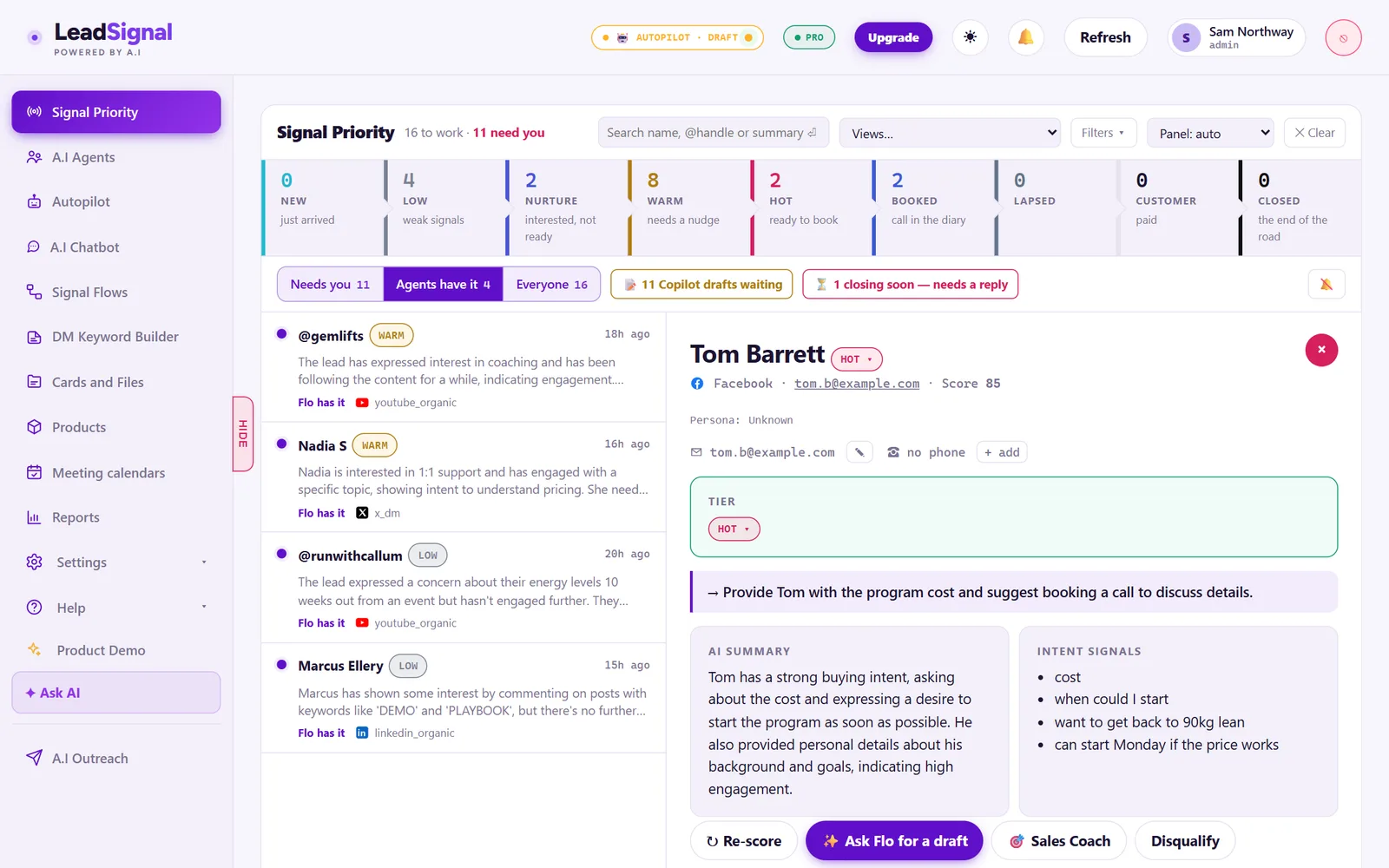
Story replies should feed the same lead record and scoring system as every other channel, covered in full in maximise your social media lead generation strategy, rather than sitting in an inbox nobody consistently checks. Once it is part of the same system, a Story reply gets the same speed and follow-up as a lead who messaged you directly, and none of that early, honest intent gets wasted.
Content ideas that reliably generate Story replies
If Story replies feel like an unpredictable trickle rather than a repeatable channel, the content driving them is usually the issue rather than the follow-up process. A poll asking a genuine question about the audience's situation tends to generate replies well beyond the poll answer itself, because it opens the door to elaborate. A behind-the-scenes moment paired with a direct question, "would this work for you too", performs similarly. The common thread is specificity: a vague Story gets a vague reaction; a Story that asks something real gets a real answer back. This does not need to be every Story you post; even one deliberately reply-inviting Story a week is usually enough to keep this channel producing a steady, trackable stream of conversations.
FAQ
Are Instagram Story replies worth treating as a real lead channel?
Yes. Story replies often carry more honest, immediate intent than public comments because they are private, but they are commonly under-monitored, which means genuine buying signals get missed or answered too late. Businesses that start deliberately watching this channel are often surprised by how much genuine interest was already there, unanswered, before they began treating it as a source worth tracking.
How can I tell which Stories are actually generating replies?
Track replies against the specific Story or content piece that produced them rather than lumping all DMs together, so you can see which content genuinely starts conversations. Over time this builds a picture of which formats, topics and prompts reliably produce replies, which you can then repeat deliberately rather than relying on chance.
Should Story replies go through the same process as DMs and comments?
Yes. Once a Story reply shows genuine interest, it should enter the same scored, prioritised follow-up process as any other lead, rather than sitting in a separate inbox with no consistent review. Treating it as a separate, lower-priority channel is how genuine early-stage buying signals go unanswered even when the reply itself only takes a moment to send. The channel a lead started on should never determine how seriously the conversation that follows is taken.
The self-serve demo builds a workspace from your real setup — no card, no call.