Why DM Response Speed Decides Who Books the Call

A prospect who messages you is, for a short window, more interested than they will ever be again. They have just made the decision to reach out, they are still looking at their phone, and their attention has not yet moved on to the next thing competing for it. DM response speed matters because that window closes, and every minute it stays open unanswered, the odds of that person still being ready to talk when you finally reply get worse.
This is not a new idea in sales generally, response speed has always mattered for inbound enquiries, but DMs make the effect sharper than phone or email ever did. A phone call missed goes to voicemail, an email sits in an inbox the sender already expects to wait on. A DM feels instant by nature, which means the gap between sending and receiving a reply is judged against a much shorter, more personal expectation, and a slow reply reads as a deliberate signal rather than a scheduling accident.
What actually happens while a lead waits
Nothing dramatic happens in the first few minutes. But a prospect who does not hear back quickly starts doing other things: scrolling to the next post, messaging a competitor who did reply, or simply losing the specific motivation that made them message in the first place. By the time a reply arrives an hour or a day later, you are not continuing the same conversation, you are trying to restart one that has already gone cold, and restarting a cold conversation is a fundamentally harder sale than continuing a warm one.
Why response speed is measurable, and rarely measured
Most accounts have a rough sense of whether they reply "fast enough", based on how it feels rather than what the data shows. In reality, response time usually varies enormously by hour of day, by channel, and by how busy a setter's queue happens to be at that moment, and none of that variation is visible without actually measuring it. You cannot fix a bottleneck you have never located.
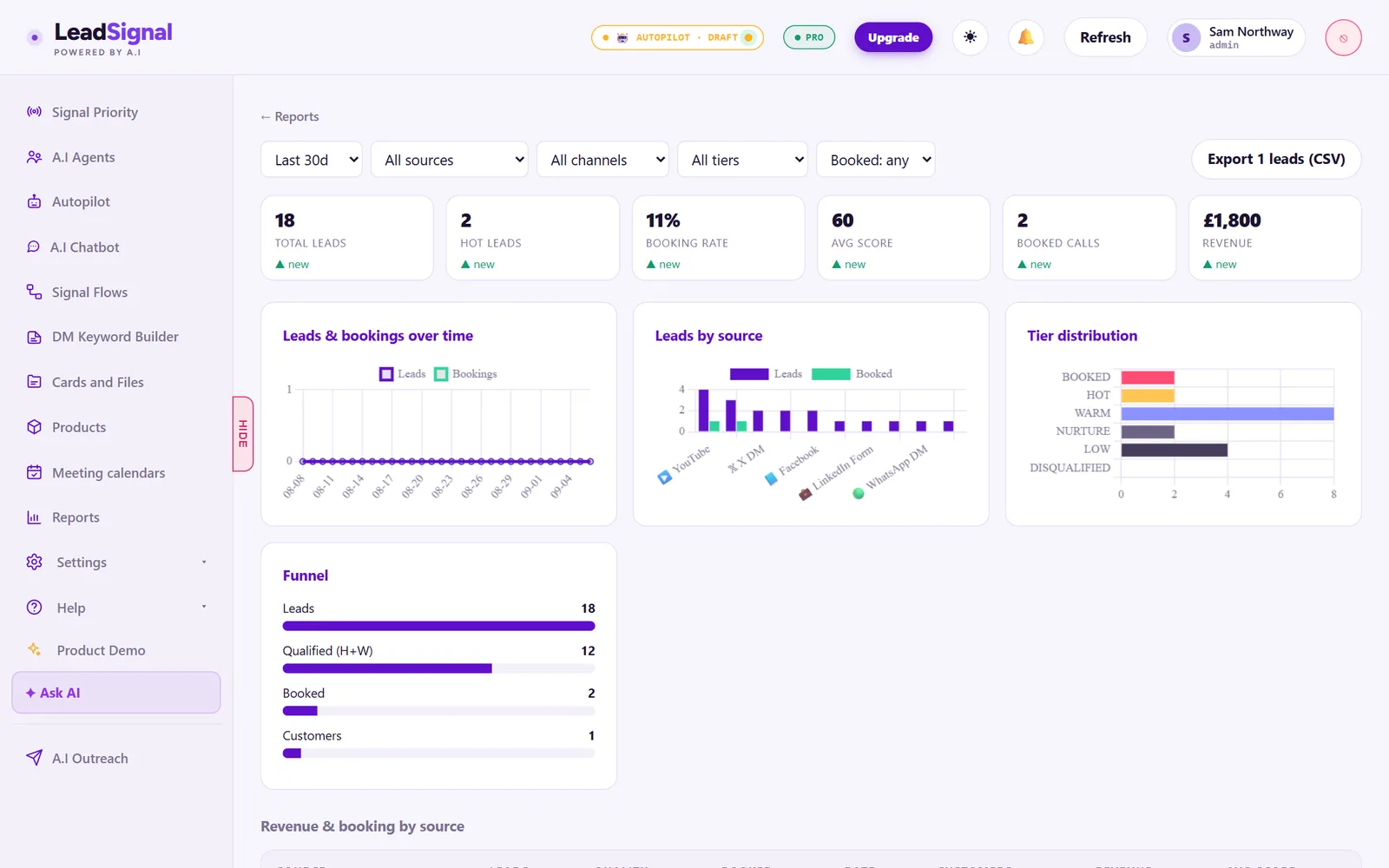
The gap between perceived and actual response speed is often larger than expected. A team that feels responsive because the busiest hours of the day are handled promptly can still be quietly slow overnight, at weekends, or during a specific high-volume period, like right after a launch, when speed matters most and coverage is often weakest. Without measurement, the parts of the week doing the most damage are invisible precisely because nobody is looking at them specifically.
The stages where speed matters most
First reply
The single biggest predictor of whether a conversation continues at all. A fast, specific first reply keeps the prospect's attention; a slow or generic one gives them a reason to disengage before the conversation has really started. This is also the reply most businesses get right by instinct, since it is the most visible one, which is exactly why the later stages below tend to be where speed quietly slips.
Qualifying questions
Once a prospect is answering questions about budget, timeline or fit, momentum matters almost as much as it did at first contact. A long gap here reads as disinterest, even when the delay is purely operational.
Booking the call
The final step, sending a booking link or confirming a time, is where speed converts intent into a calendar entry. A delay here risks losing a prospect who was ready to commit but moved on before the practical next step arrived. This stage is often treated as an afterthought because the hard qualifying work already happened, but a slow booking link is exactly the kind of small, avoidable delay that undoes real momentum right at the finish line.
Why the effect compounds rather than staying constant
Response speed does not degrade a lead's interest in a straight line. The first delay costs relatively little; a prospect who waited ten minutes for a reply barely notices. But each additional gap after that compounds, because the prospect's attention has partially moved elsewhere and now has to be recaptured as well as maintained. A conversation with three slow gaps in it is considerably harder to close than one with a single equivalent total delay concentrated in one place, which is why consistent speed throughout a conversation matters more than a single fast first reply followed by silence.
Building a setter workflow around speed, not just diligence
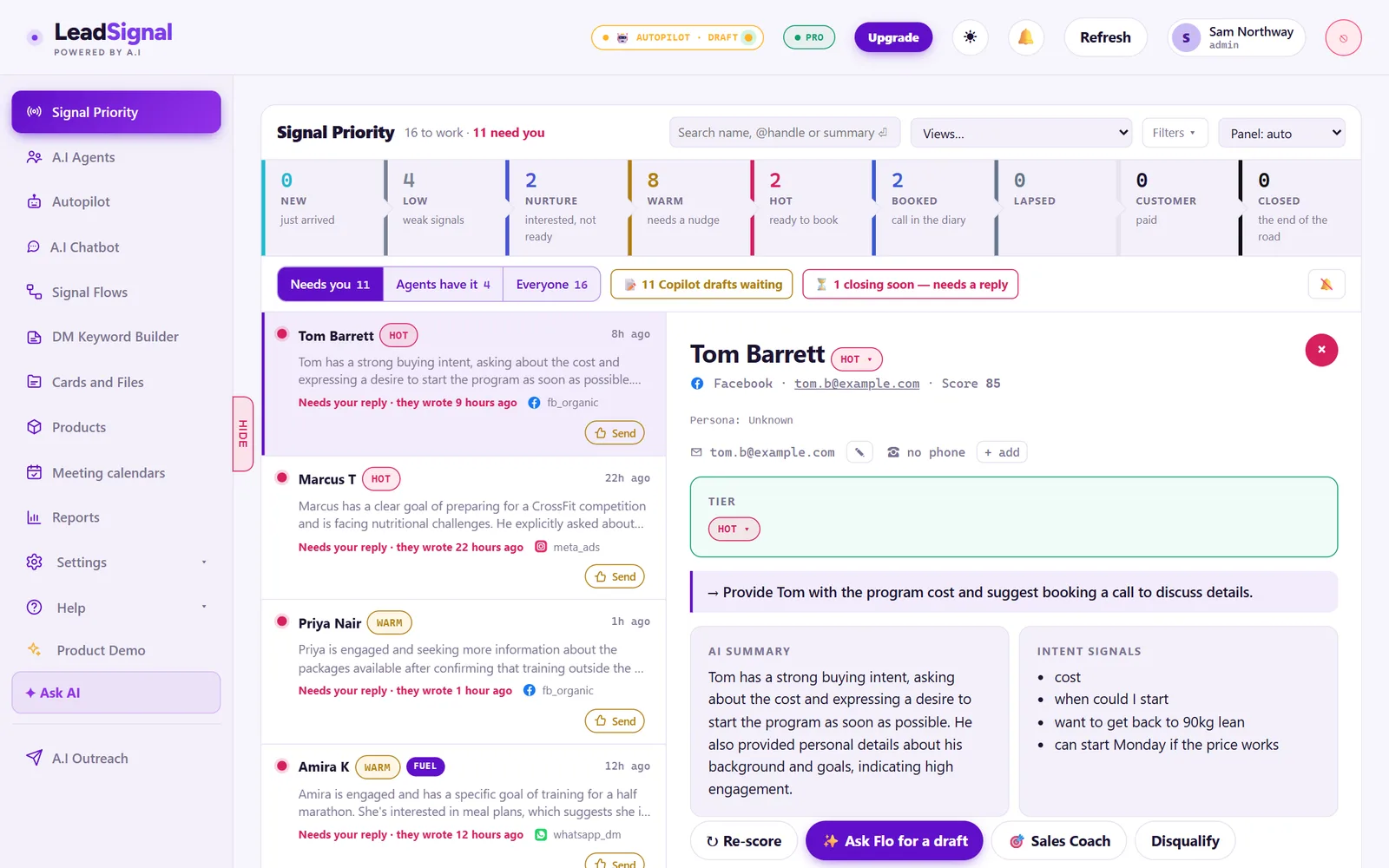
- Prioritise the queue by buying-intent score, not by when a message arrived, so the hottest conversations are never sitting behind cooler ones.
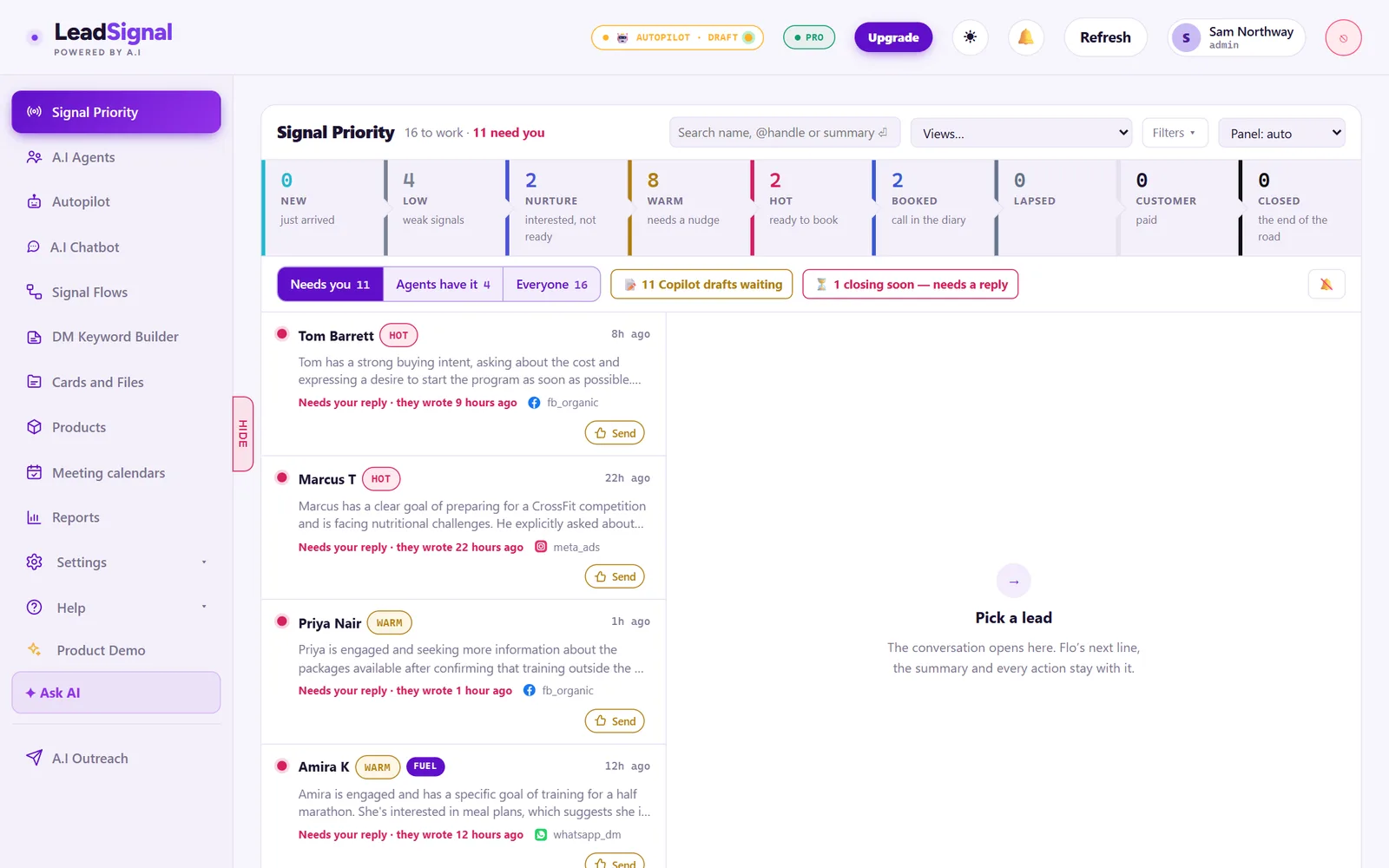
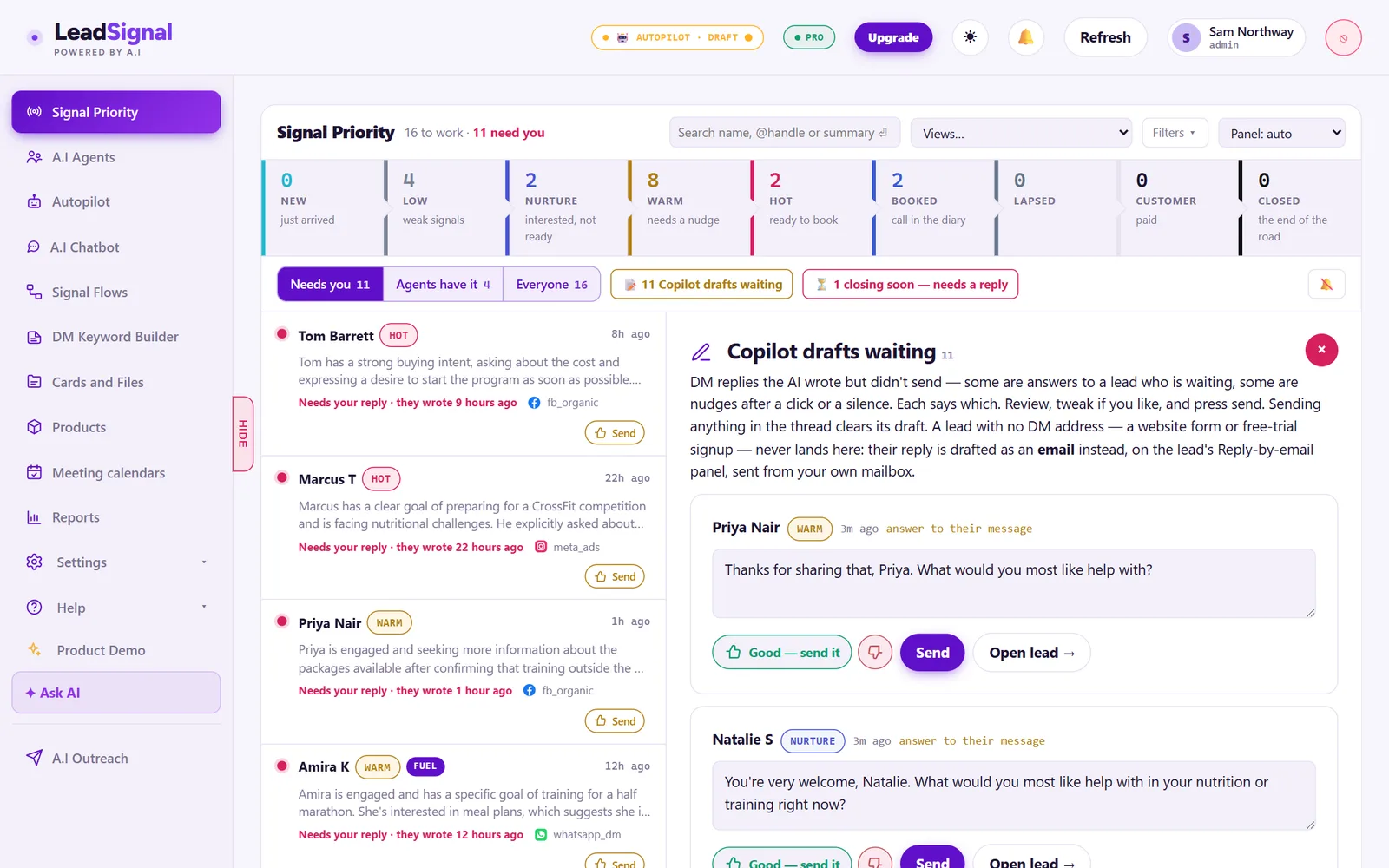
- Use AI-drafted replies for the first response, with human approval, so speed does not depend on someone being free to write from scratch at that exact moment.
- Measure response time by hour and by channel, so gaps in coverage (evenings, weekends, a newer channel nobody has fully adopted yet) are visible rather than assumed away.
- Treat a slow response time as a process problem to fix, not a staffing complaint to absorb quietly.
- Build a defined backup for peak hours, rather than relying on a single person's availability to determine whether the busiest, most valuable hour of the day gets covered.
The trade-off between speed and thoughtfulness, and why it is a false one
A common objection to prioritising response speed is that it comes at the cost of a thoughtful, considered reply, that a business should take its time to respond properly rather than rushing something out. In practice this trade-off is largely false, because the two problems have different solutions. Speed is solved by removing the operational delay between a message arriving and a human seeing a draft worth reviewing; thoughtfulness is solved by what that draft actually says. An AI-assisted first reply, reviewed by a human before sending, achieves both, because the human's judgement is applied to a draft that already exists rather than spent on the mechanical work of writing one from nothing.
What good response speed actually buys you
Faster replies do not just feel more professional, they directly protect the conversion rate of every lead you are already generating. Improving response speed is one of the few changes that increases bookings without needing more traffic, more content or more spend, because the leads were already there; the only thing slowing them down was the wait.
What a realistic target looks like
There is no single universal benchmark that suits every business, since acceptable speed depends on volume, offer price and audience expectations. What matters more than hitting a specific number borrowed from somewhere else is setting an explicit target for your own account, measuring against it consistently, and treating any widening of that gap as something to investigate immediately rather than something to notice weeks later once bookings have already dropped.
A useful starting discipline is simply reviewing your own last month of conversations and noting, honestly, how many replies took longer than felt reasonable to you as the business owner. That single exercise, done once, usually tells you more about where the real target should sit than any external benchmark would.
Where to go from here
Once response speed is under control, the next question is how conversations get prioritised and handed between people without losing momentum, covered in building a prioritised DM queue for appointment setters and a setter's workflow for qualifying leads inside Instagram and Facebook DMs.
FAQ
How much does DM response speed actually affect conversion?
Response speed is one of the strongest predictors of whether a lead continues the conversation at all, because interest is highest immediately after a prospect messages and fades the longer they wait without a reply.
What is the easiest way to measure response speed?
Track the time between a lead's message and the first reply, broken down by hour of day and by channel, so you can see exactly where delays happen rather than relying on a general sense of "we reply fast enough." Reviewing this weekly, rather than only when a problem is already suspected, catches drift before it becomes a pattern.
Does faster response speed mean lower-quality replies?
Not necessarily. AI-drafted first replies, reviewed and sent by a human, can maintain both speed and quality, since the draft removes the time cost of writing from scratch without removing human judgement from what actually gets sent. The two problems, speed and quality, have different solutions and do not need to be traded off against each other.
The self-serve demo builds a workspace from your real setup — no card, no call.