A Setter's Workflow for Qualifying Leads Inside Instagram and Facebook DMs

Booking every DM conversation onto a call, regardless of fit, fills a calendar with unqualified meetings that waste everyone's time and quietly damage close rates. Sending nobody through without an exhausting, ad hoc back-and-forth loses genuinely good leads to slow, inconsistent qualification. A repeatable setter workflow sits between those two failure modes: fast enough to keep a warm conversation moving, thorough enough that the person who actually shows up for a call is worth having on it.
Most setter teams eventually build some version of a qualification process, but it usually lives in someone's head rather than being written down and applied consistently. That works fine until the team grows, or the original setter who intuitively knew what to ask leaves, and suddenly the quality of who gets booked onto a call starts drifting without anyone quite being able to explain why.
What qualification is actually for
Qualification is not an obstacle between a lead and a booked call, it is what makes the call worth having for both sides. A closer's time is finite, and a call with someone who cannot afford the offer, is not the decision-maker, or has no real timeline costs the same slot that a genuinely ready buyer could have used. Good qualification protects the calendar without feeling like an interrogation to the person on the other end of the DM.
The workflow
1. Confirm the conversation deserves setter attention
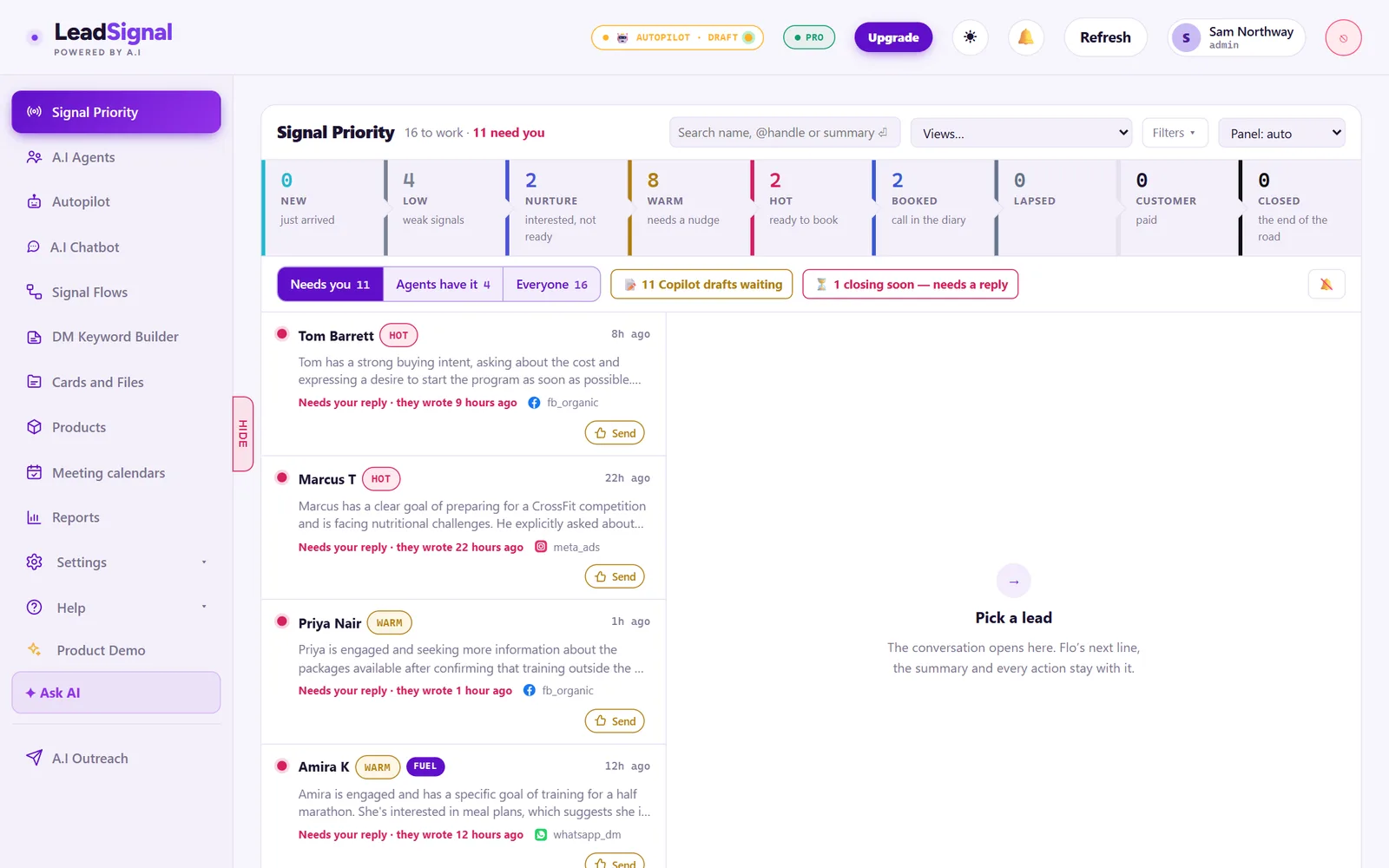
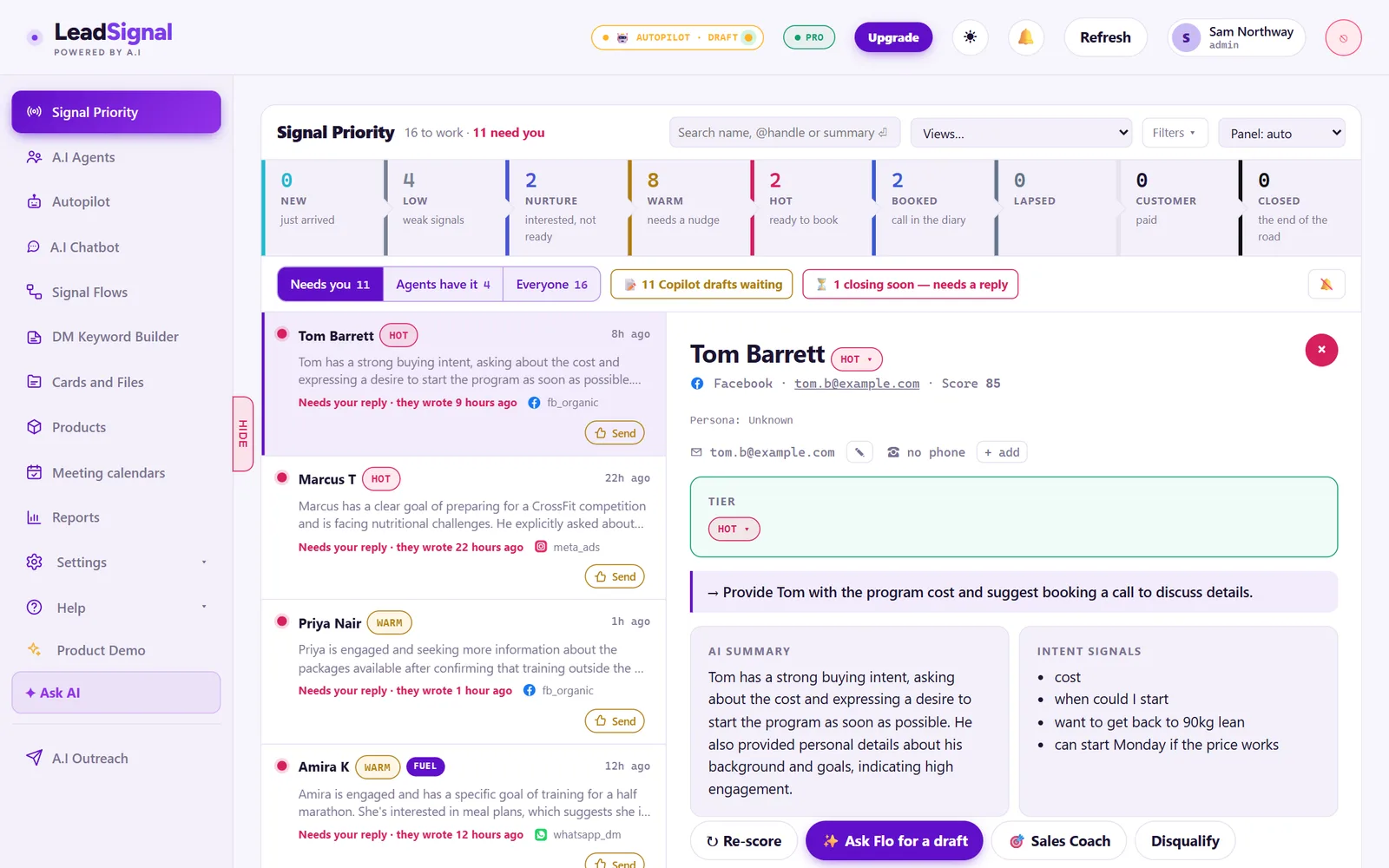
Before investing time in a full qualifying conversation, confirm the lead shows real buying-intent signals rather than general engagement. This is where lead scoring, covered in inside LeadSignal's AI Autopilot, does the first filtering pass automatically.
2. Ask one open question before any closed ones
Starting with "what made you reach out" or "what's going on that made you look into this" gets more useful information than jumping straight to budget, and it keeps the conversation feeling human rather than like a form being filled in. The answer to this single question often does much of the qualifying work for you, since people tend to reveal their timeline and seriousness naturally when explaining their own situation.
3. Qualify on fit, not just interest
Interest is necessary but not sufficient. A workable qualification pass covers whether the person is the decision-maker, has a realistic timeline, and has a rough sense of whether the investment involved is in the right range for them, without demanding an exact number if that feels premature this early. Skipping this step in favour of booking anyone who shows enthusiasm is how a calendar fills up with meetings that were never going to close, regardless of how well the call itself is run.
4. Handle hesitation without pushing past it
A prospect who hesitates on a qualifying question is not necessarily a bad lead, they may just need a moment before answering honestly. Acknowledge the hesitation, offer a lighter version of the question, and let the conversation breathe rather than repeating the same question more forcefully.
5. Move to booking the moment fit is confirmed
Once qualification is genuinely complete, do not let the conversation drift. Send the booking link or propose specific times immediately, while the prospect's attention and momentum are still with you.
6. Hand off with full context, not a summary
If a closer takes the call rather than the setter, the full conversation history, not a one-line summary, should travel with the booking. A closer starting cold on a call the prospect thinks they have already explained themselves for is a fast way to lose trust right before the moment that matters most.
Handling the leads that are not quite ready
Not every qualifying conversation ends in a booked call, and that is a correct outcome, not a failure of the workflow. A lead who is genuinely interested but not currently ready, wrong timing, budget not yet available, still deserves a clear next step rather than being dropped. Noting the specific reason they are not ready now, and setting a genuine point to follow up, keeps that lead warm for when their situation changes, instead of treating "not ready yet" the same as "not interested."
Training a new setter on this workflow
A written workflow is only as useful as how consistently it is actually followed, and the fastest way to break consistency is bringing on a new setter without a clear reference for how qualification should sound in practice. Reviewing real, anonymised conversation examples, both ones that qualified well and ones that did not, teaches the judgement calls involved far faster than a written script alone, since so much of good qualification is about tone and timing rather than a fixed set of questions to work through mechanically.
Avoiding qualification that feels like an interrogation
The line between thorough qualification and an interrogation is thinner than it seems, and prospects notice quickly when they are being processed through a checklist rather than spoken with. Spacing qualifying questions naturally through the conversation, rather than firing them one after another, and genuinely responding to what the prospect says rather than moving straight to the next scripted question, keeps a qualifying conversation feeling like a conversation.
A simple test for this is to reread a qualifying conversation afterwards and ask whether it would read naturally as a text exchange between two people, or whether it reads like a form being completed one field at a time. If it is the latter, the questions themselves may be right, but the pacing and tone around them need to change.
What good qualification protects
- The closer's calendar, by filtering out conversations that are not genuinely ready.
- The prospect's experience, since a well-qualified call feels relevant rather than generic.
- Your close rate, since calls booked from properly qualified conversations convert at a meaningfully higher rate than calls booked from anyone who simply asked.
Where this fits into the wider setter system
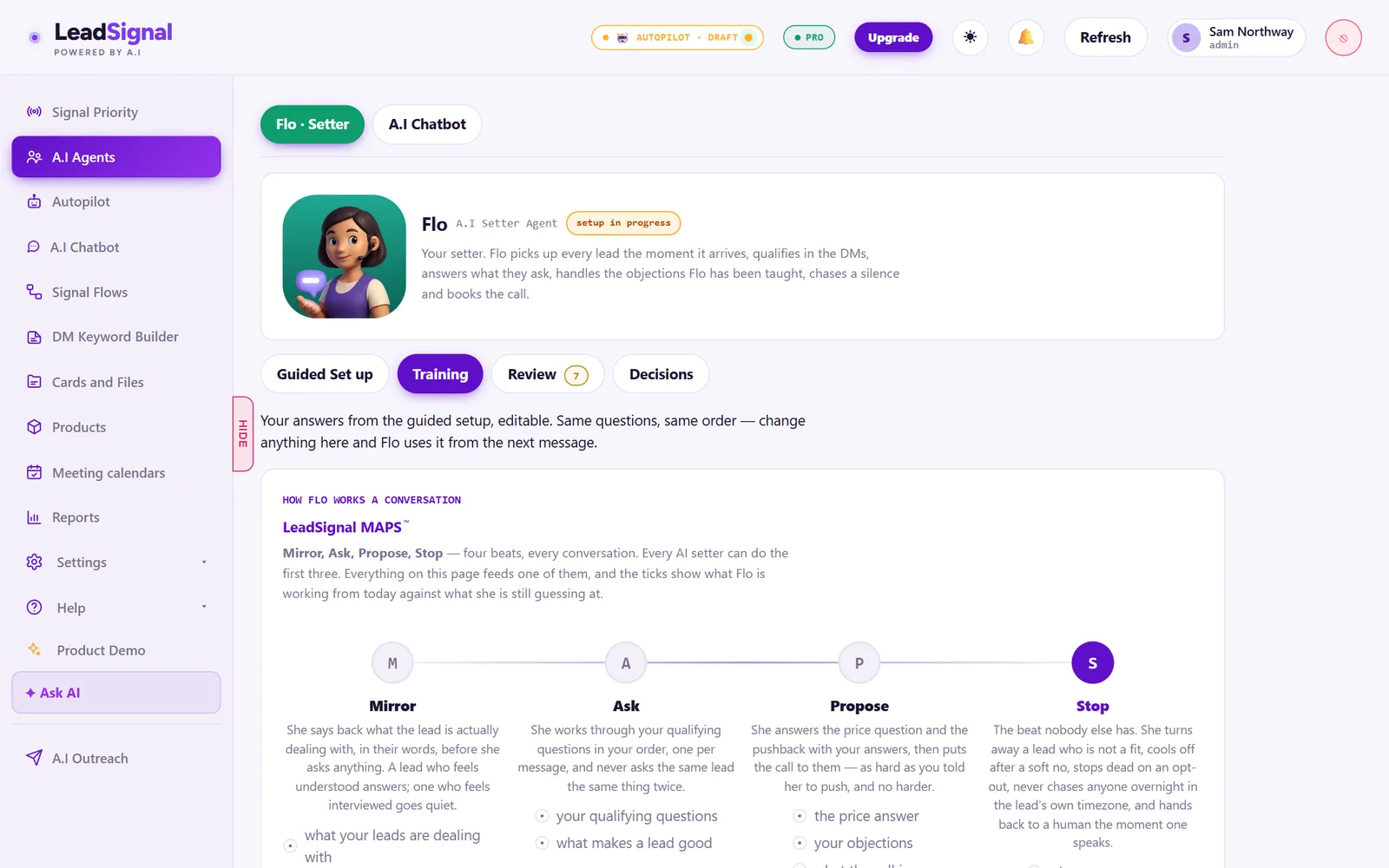
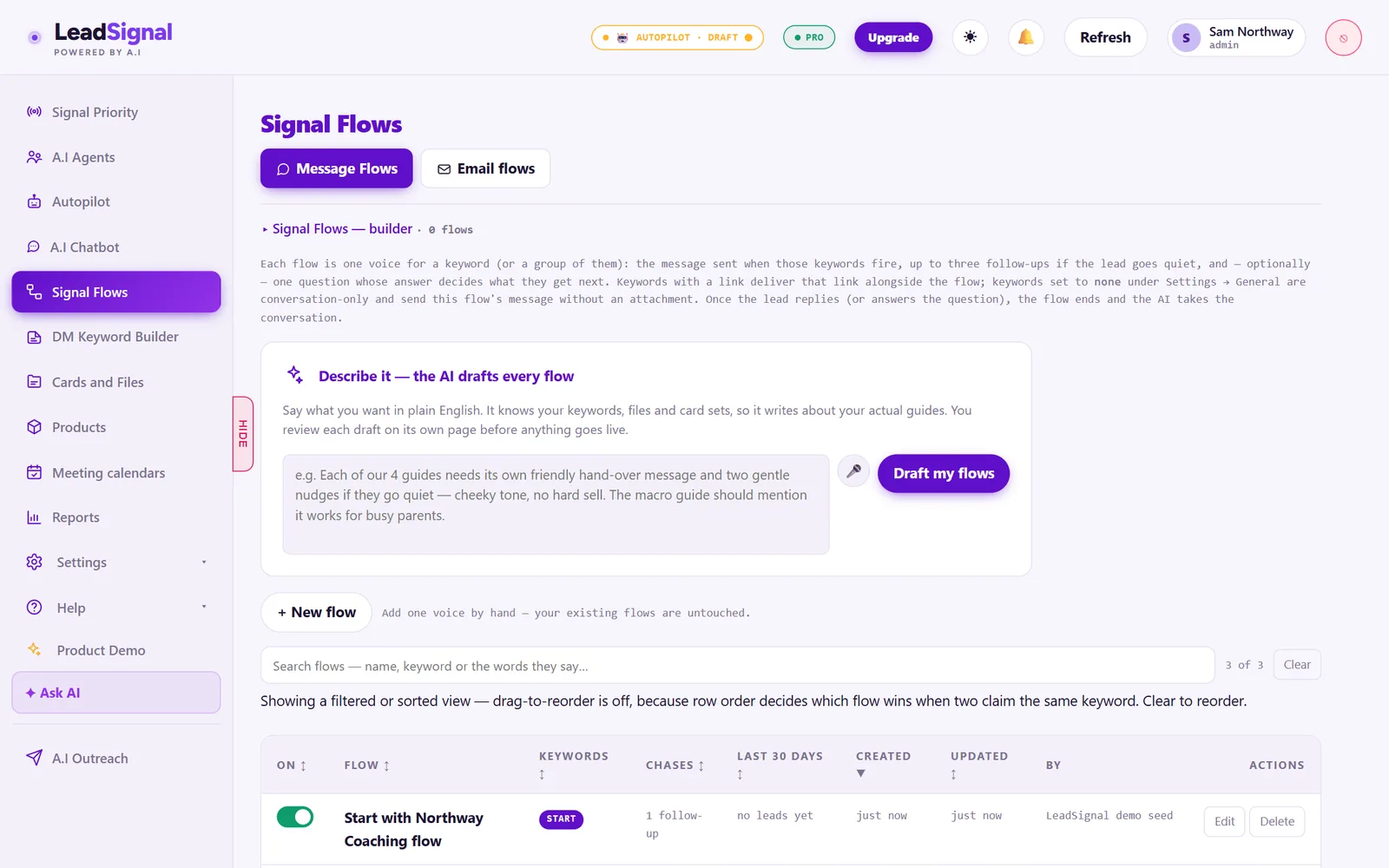
This workflow works best sitting on top of a prioritised queue, covered in building a prioritised DM queue for appointment setters, so setters spend their qualifying time on the conversations most likely to be worth qualifying in the first place, and on top of the response-speed discipline in why DM response speed decides who books the call, since a slow start to a qualifying conversation undoes much of the value of qualifying well once the conversation finally gets moving. LeadSignal supports this end to end, from initial scoring through AI-drafted qualifying questions to a booked, context-complete handover.
FAQ
How long should DM qualification take before booking a call?
There is no fixed length, but the aim is to confirm genuine interest, fit and timeline in as few exchanges as naturally possible, moving to booking as soon as that is established rather than extending the conversation unnecessarily.
What should a setter do if a lead will not answer budget questions directly?
Acknowledge the hesitation and ask a lighter version of the question, such as a rough range rather than an exact figure, rather than repeating the same direct question, which often makes a hesitant prospect disengage entirely. Sometimes deferring the budget question to the call itself, once trust is stronger, is the better call.
Why does handover context matter if the closer is experienced?
Because a prospect who has already explained their situation to a setter expects the closer to know it. Starting a call cold, asking the same questions again, reads as disorganised regardless of how skilled the closer is, and it puts the burden of re-explaining themselves back on the prospect at exactly the point where the conversation should be moving forward, not backward.
The self-serve demo builds a workspace from your real setup — no card, no call.